Across India, preschool and early primary education are changing fast, and so are expectations from parents and regulators.Parents no longer feel satisfied with photos of “activities”; they want proof that their child is actually learning to read, write and understand numbers. At the same time, the National Education Policy (NEP) 2020 and the NIPUN Bharat Mission have made foundational literacy and numeracy (FLN) in the early years the top national priority, putting more pressure on schools to show real outcomes, not just enrolment. For many preschool owners, this raises a tough question: How do we show measurable FLN outcomes without raising fees or overloading teachers? Why FLN pressure is rising NEP 2020 clearly states that achieving foundational literacy and numeracy by Grade 3 is the highest priority for the school system, because without this, the rest of the curriculum does not matter.NIPUN Bharat was launched to turn this into action, aiming for all children to reach grade-level reading and basic math proficiency in the early years through training, learning materials and monitoring. National surveys like ASER 2024 show why this is urgent: even after some recovery, only about one‑third of Class 3 children in government schools can read a Class 2 text or do a simple subtraction, and many older students still struggle with basic arithmetic. This has sent a clear signal to governments, boards and school owners: if children are not strong in FLN by Grade 2–3, the whole system is failing them. Parents now ask: “What did my child actually learn?” On the parent side, expectations have also changed.Today’s millennial and Gen‑Z parents are used to apps that show progress, health scores, and weekly reports in other parts of life; they expect something similar from their child’s school. When they visit a preschool, they don’t just ask about safety and infrastructure; they also ask how the school builds strong reading and math foundations, and how they can see that progress over time. If a competing preschool shows neat learning portfolios, simple skill reports, or digital progress snapshots, and your school can only show a pile of worksheets, you lose an important edge in admissions and retention. The challenge: outcomes without higher fees Most preschool owners genuinely want better outcomes, but they face real constraints: As a result, even committed schools struggle to turn good teaching into clear, simple evidence that parents and regulators can understand. A new option: a structured practice app for Nursery–UKG This is where a structured practice app designed specifically for Nursery–UKG, like Effling Kids, can quietly do the heavy lifting in the background.Effling is built as a safe, smart, paperless learning platform for early years, covering math, English, Hindi, counting, object recognition, writing practice and worksheets. Instead of replacing your teachers or changing your curriculum, a practice app can act as a “practice engine” that: Because the app is structured around FLN competencies, every small practice session contributes to the bigger goal NEP and NIPUN Bharat talk about: strong foundations in reading and numeracy by Grade 2–3. How Effling‑style practice works in a preschool day A simple way to integrate this in your timetable: For Effling specifically, Math AI can automatically generate age‑appropriate tasks, check them in real time, and gently increase or decrease difficulty to keep each child in the “fun challenge” zone.Over a month, this creates a rich, honest picture of each child’s strengths and gaps—without adding manual data entry for your staff. Turning practice data into simple reports that parents understand Raw data is not enough; what convinces parents is clear, simple reporting that answers two questions: Is my child on track? And what are we doing about it? A structured practice app can help you generate: With Effling‑type data, you can tell a parent:“Last month, your child spent around X minutes on number practice, confidently solved addition within 10, and is now beginning to work on word problems with pictures.” This is far more powerful than saying, “We did many activities,” and hoping parents trust you. How does this strengthen your position with regulators and boards When inspectors, auditors or board members visit, they increasingly ask about learning outcomes, not just infrastructure.By using a structured practice app aligned to FLN goals, you can show: This positions your preschool as a proactive, NEP‑aligned institution that takes FLN seriously—an advantage in a future where learning outcomes will matter more and more. Doing all this without increasing fees The best part is that this approach does not require you to raise fees or invest in expensive hardware: In other words, you convert the effort you are already spending into visible, shareable learning outcomes—without asking parents to pay more. How Preschools Can Collaborate With Effling Kids and Support Home Learning Strong learning outcomes come when school and home move in the same direction, not separately. Research consistently shows that when parents and teachers work together, children’s progress in the early years is faster and more stable. Right now, we don’t ask schools to sign up through a complicated portal. Instead, we keep collaboration simple and personal: This way, your preschool becomes the bridge: you recommend one safe, structured app instead of random videos, and families get an affordable way to continue the same learning at home. Let’s collaborate with usWhatsApp: 9794783697Email: info.effling@gmail.com FAQs for Preschool Owners 1. Why is everyone suddenly talking about “foundational literacy and numeracy (FLN)” in early years?Because NEP 2020 and the NIPUN Bharat Mission clearly say that every child should achieve grade‑level reading and basic math by around Grade 3, and make this the highest priority of the school system. National surveys like ASER 2024 still find many children in Classes 3–5 struggling with Class 2‑level reading and simple arithmetic, so regulators and boards are now asking schools to show real FLN outcomes, not just activities. 2. How can a preschool realistically “show outcomes” when children are so young?You don’t need exams; you need evidence of regular, structured practice in core skills and simple records of progress. This can include teacher observations, sample work, and increasingly, data from digital tools that show time spent, skills practised, and improvement over… Continue reading How Preschool Owners Can Show Real Learning Outcomes Without Increasing Fees

Category: Early Education
11 Easy Science Experiments for Toddlers and Preschoolers at Home or Kindergarten

Discover 11 simple, low‑cost science experiments you can do at home with toddlers and preschoolers using everyday materials. Each activity builds curiosity, early STEM skills, and language while keeping learning playful. Perfect for homeschooling or after‑school time, and easy to pair with Effling Kids practice sessions. 1. Sink or Float Bucket Link to Effling: later do counting or “more/less” questions in Math AI. 2. Colour‑Mixing Water Cups Link to Effling: talk about colour names in English/Hindi, then do colour activities in the app. 3. Baking Soda & Vinegar “Mini Volcano” Safety: do on a tray, away from eyes; no tasting. 4. Walking Water / Paper Towel Rainbow Great for patience and observation. 5. Floating vs Sinking in the Bath Simple to add to the daily routine. 6. Oil and Water in a Jar 7. Nature Scavenger Hunt (Mini STEM Walk) Link to Effling: later practise counting, colours, “bada–chhota” vocabulary. 8. Block / Cup Tower Challenge You can also ask them to build a “bridge” between two books or stools. 9. Salt vs Sand in Water Great for early “dissolve vs not dissolve” understanding. 10. Ice Rescue 11. Five Senses Mystery Bag You can later connect to Effling with vocabulary (soft/hard, loud/quiet, rough/smooth).
Make Math Tables Easy for Kids (Without Rote Learning)
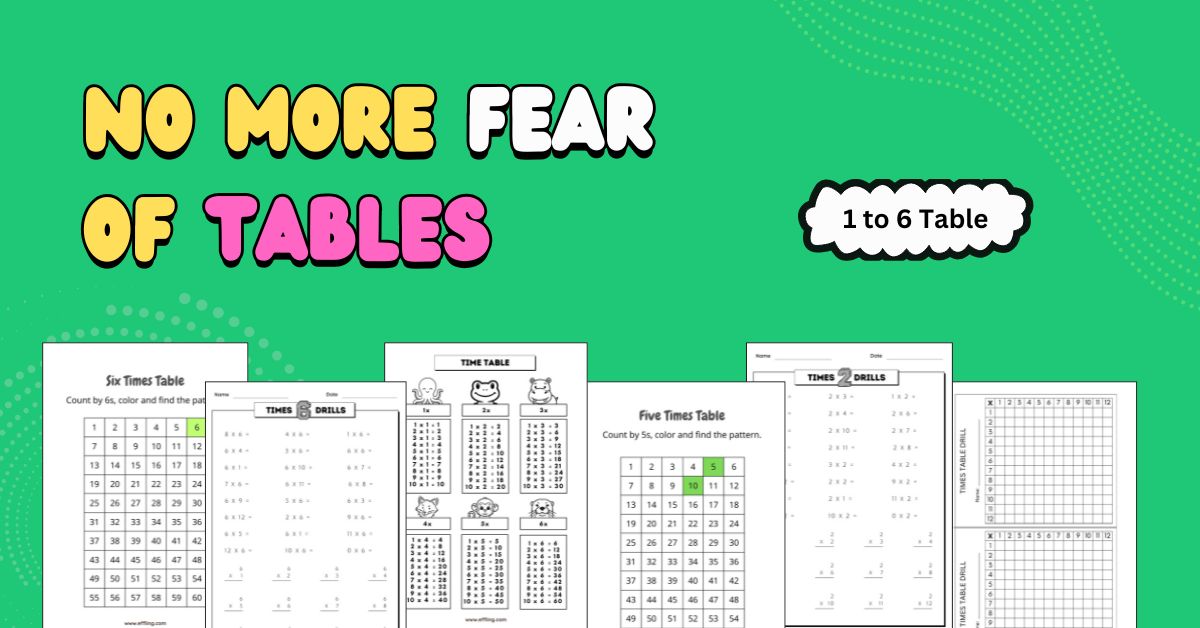
Most children struggle with multiplication tables.Not because math is hard, but because the way we teach it is. For years, kids have been told to memorize tables again and again.But memorizing without understanding often leads to fear, confusion, and forgetfulness. What if tables could be learned in a smarter, easier way? Introducing a Better Way to Learn Tables We designed these math worksheets to help children see, practice, and understand patterns, not just repeat numbers. Instead of only reading tables like:2 × 3 = 63 × 4 = 12 Children get to: What Makes These Worksheets Different 1. Practice + Writing = Better Learning Children don’t just read tables, they write them. Writing helps: When a child writes 2 × 5 = 10 multiple times,They don’t just remember it, they understand it. 2. Pattern-Based Learning (Not Just Memorizing) In worksheets like “count by 2s, 3s, 4s,” children: This builds real math understanding, not just rote memory. 3. Step-by-Step Table Drills Each page focuses on one table: Children practice: This builds confidence slowly without pressure. 4. Visual + Activity-Based Learning With grids, coloring, and patterns: Why This Matters for Early Learners Rote learning often leads to: But when children: They develop: How to Use These Worksheets Consistency matters more than speed. Final Thought Math is not about memorizing numbers.It’s about understanding patterns and building confidence. When children learn through writing and practice,they don’t just remember tables — they learn how math works. That’s the goal.
What Private Schools in India Can Learn from Nepal’s Fee Crackdown
Education in India has always been seen as an investment. But for many families today, that investment is starting to feel heavy. School fees keep rising. Add admission charges, development fees, books, uniforms, activity charges, and transport, and the cost becomes difficult for middle-class parents to handle. In that context, Nepal’s recent move against excessive private school fees is worth paying attention to. This is not just a local policy decision. It is a sign of where education in South Asia may be heading. Nepal’s Message to Private Schools The Nepal government has taken strict action against private schools charging excessive or unfair fees. Schools have been told to stop charging random fee categories, refund unlawful amounts, and follow clearer rules. In some cases, repeated violations can even lead to licence cancellation. That sends a strong message: Education should not become a luxury. Parents should not be forced to pay hidden charges just to secure their child’s future. And schools should not treat fees as a space for unchecked commercialisation. Why This Matters for India India is facing the same concerns. Many parents here already struggle with: For a large number of families, education has become one of the biggest expenses in the household budget. Private schools do provide value, and many do good work. But the problem is not just the fee amount. It is the lack of clarity. Parents often do not know what they are really paying for, and that creates frustration, mistrust, and pressure for change. What Private Schools Should Learn Instead of waiting for stronger regulation, schools can take the lead themselves. 1. Transparency builds trust When fees are simple, clear, and well explained, parents feel more comfortable. A school that openly shows what it is charging for will usually earn more trust than one that hides charges behind vague categories. 2. Learning matters more than appearances Parents do care about infrastructure. But what they care about more is outcomes. Is the child reading better?Can the child write clearly?Are they improving every month? Big buildings and fancy classrooms mean little if learning is weak. 3. Reduce the financial burden Schools that actively try to reduce costs can stand out in a positive way. Families remember schools that make education more affordable. In the long run, that builds stronger relationships and a better reputation. The Future Is Smarter and More Affordable This is where technology can help. Instead of increasing costs, schools can use smart tools to: The future of learning is not just digital. It is also more efficient, more focused, and more family-friendly. How EfflingKids Can Help Effling Kids is built on a simple belief: Quality early education should be safe, smart, and paperless. With Effling Kids, children can get structured daily learning in just 15–20 minutes. The practice happens digitally, which reduces the need for multiple notebooks and worksheets. Parents can see progress clearly, and schools can support foundational learning without placing an extra burden on families. That means better learning, less paper, and lower cost. A Better Way for Schools to Work with Parents Private schools do not need to choose between quality and affordability. They can work with platforms like Effling to: This is not about replacing schools. It is about helping them become more effective, more transparent, and more parent-friendly. What the Future May Bring Nepal’s action may be an early sign of a broader trend. Across countries, governments are becoming more aware that rising education costs create inequality and dissatisfaction. If schools do not keep fees fair and transparent, stricter regulations may follow in more places, including India. That is why schools should act now. Not because they are forced to.But because it is the right thing to do. Final Thought Parents today are asking a different question. They are no longer only asking, “Which school is best?” They are also asking, “Is this school worth the cost?” The schools that will lead in the future are the ones that stay transparent, focus on real learning, and find smarter ways to educate children without overburdening families. Education should empower families, not pressure them. The shift has already begun.
Nursery to UKG Fees in India: A Simple Guide for Parents
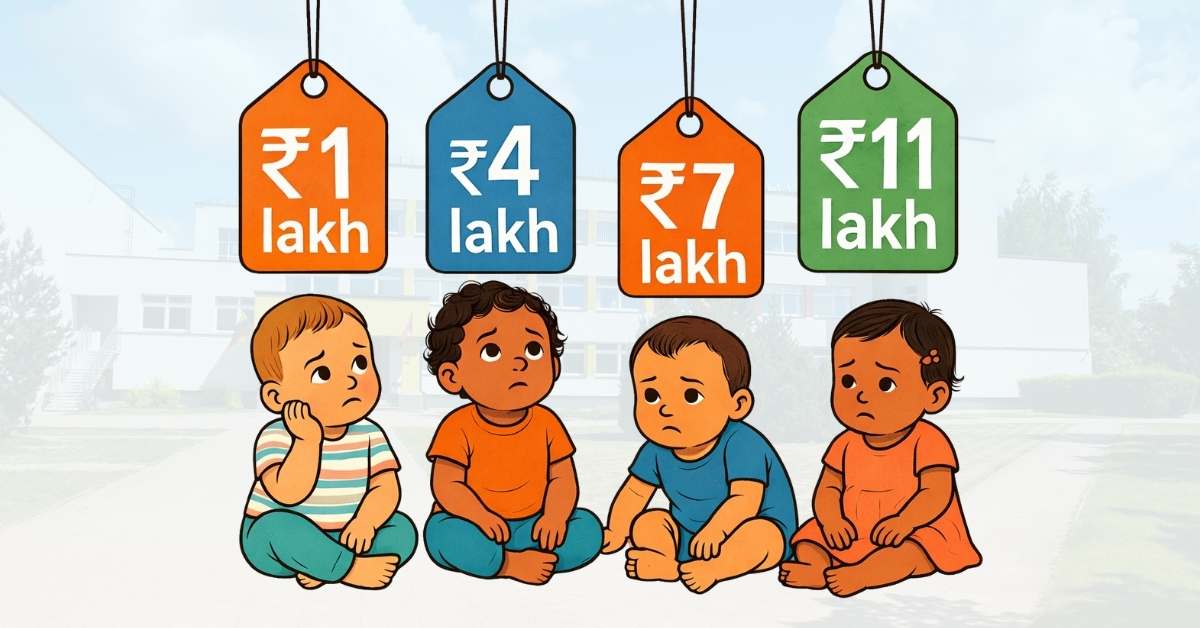
If your child is around 3 to 6 years old, you’ve probably started looking for schools. Nursery, LKG, UKG… and then suddenly, the fees. In many schools, the yearly cost can go from ₹10,000 to even ₹60,000 or more. And that’s not all. There are admission charges, books, uniforms, activity fees… slowly, it keeps adding up. For many parents, this feels heavy, especially when the child is just starting to learn basic things like A, B, C, or 1, 2, 3. It makes you think, is this really worth it at this stage? What Children Actually Learn in Nursery to UKG At this age, children are not studying difficult subjects. They are just building their base. They learn: And honestly, most of this comes from practice, not from expensive classrooms. Children learn more when they: Why Many Parents Are Rethinking This These days, many parents are gradually changing how they view early education. It’s not that school is bad. But depending only on expensive systems doesn’t always feel right. So parents try other ways also: Because at home, they can give more time and attention. But There Is Still a Problem Even these options are not perfect. Worksheets are good, but once done, you need to print again.Many apps are full of videos, but kids just watch and don’t practice much. Sometimes there is no proper flow of learning. So parents get confused, what is the right way? A Simple Way That Actually Works At this stage, learning should be simple. Children don’t need pressure. They need: When a child writes something 5–10 times, they remember it better.When they enjoy it, they don’t resist learning. That’s where things start improving naturally. A More Practical Option for Parents Effling Kids is designed to make early learning simple and practical for children from pre-nursery (toddler stage) to UKG. In the beginning, kids start with basic tracing, lines, and shapes, which help improve handgrip and control. As they grow, they move to the alphabet, numbers, and understanding concepts step by step. With Preschool Math AI, children can practice and get real-time feedback, helping them learn from mistakes and improve with unlimited practice. Parents also stay in control through a simple panel that lets them set screen time and track their child’s progress. Key highlights: It’s simple, structured, and made for how children actually learn. Let’s Talk About Cost In India, Nursery to UKG fees are not fixed and can vary a lot depending on the city and type of school. In smaller towns, some schools may charge around ₹10,000 to ₹25,000 per year. In bigger cities or private branded schools, fees can go between ₹30,000 and ₹60,000 or even higher. Along with yearly fees, many schools also take a one-time admission charge, which can range from ₹5,000 to ₹50,000. Apart from this, parents often have to pay extra for books, uniforms, activities, and sometimes daycare. Because of all these added costs, the total expense of early education can become quite high for many families, especially at a stage where children are just starting basic learning. Effling Kids App is much simpler in comparison, ₹69 per month or ₹699 per year. For many families, this feels more manageable. What Really Matters in the End In their early years, children don’t remember big buildings or fancy classrooms. They remember: And that’s what builds their base. Final Thought You don’t always need to spend a lot to give your child a good start. With a little time, the right tools, and daily practice, learning can happen very well at home, too. Every parent just wants their child to learn well and feel confident.And sometimes, simple ways work better than expensive ones. FAQs What are Nursery to UKG fees in India? Usually between ₹10,000 and ₹60,000 per year, depending on the school and city. Can I teach my child at home? Yes, many parents do it. With regular practice and simple tools, children can learn well at home. Are worksheets enough? They help, but they are limited. Kids need repeated practice and engagement. Do apps really help children learn? Some do, but many are only for watching. Practice-based tools are more useful. What is a simple and affordable option? You can combine home learning, worksheets, and tools like Effling to support your child. 👉 Start Small If you want a simple way to help your child practice daily, you can try the EfflingKids App starting at ₹69/month.
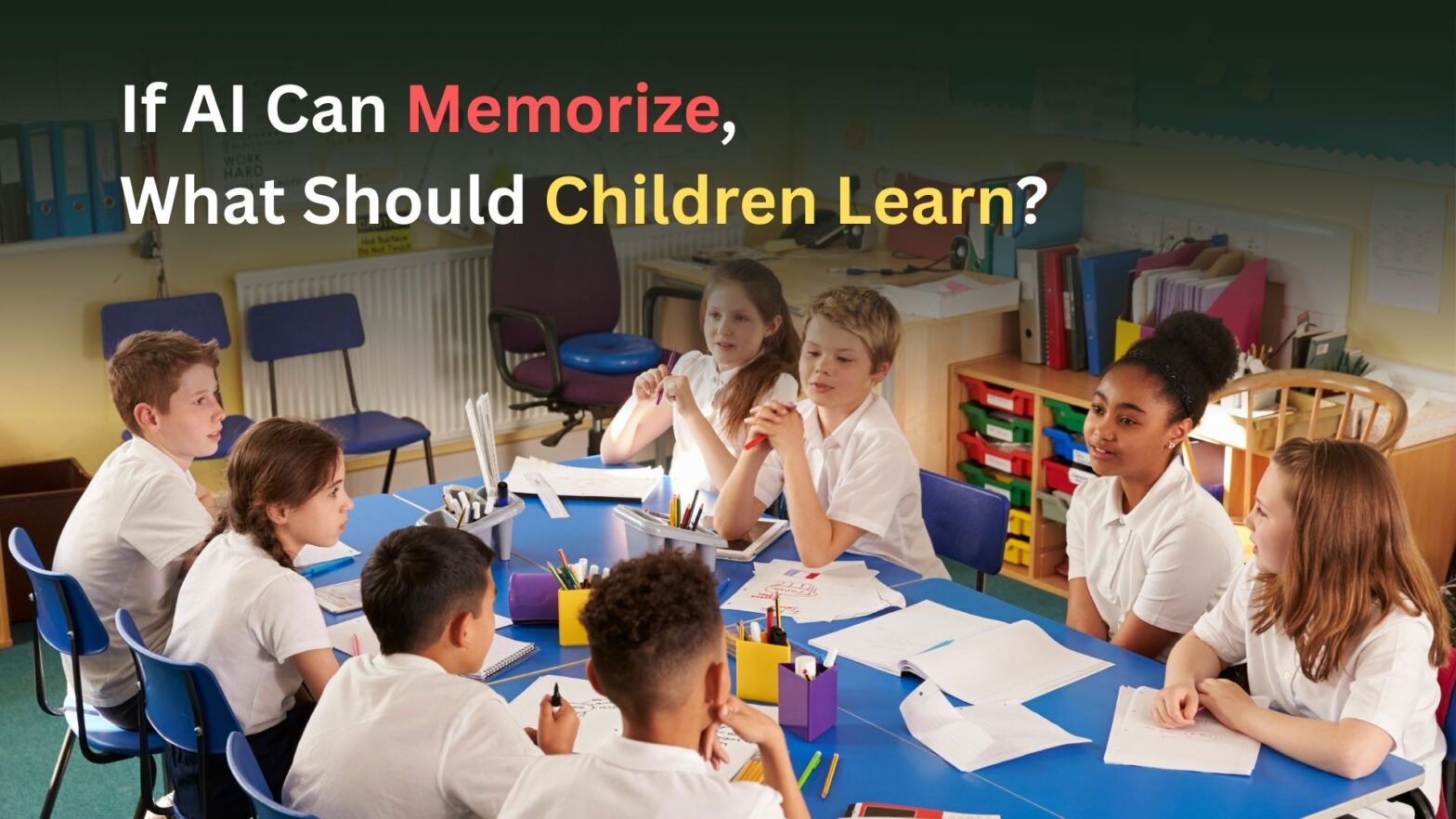
If AI Can Memorize What Should Children Learn?
Education is shifting from chasing exam scores to building real-world abilities. Increasingly, employers and experts emphasize durable skills (communication, problem-solving, teamwork, creativity, etc.) over straight grades. Research shows that modern jobs reward practical skills – sometimes more than degrees – and that traditional grades alone don’t guarantee success. For example, a recent study found 75% of companies are struggling to find skilled workers and are “easing or eliminating the university degree filter” in hiring, focusing instead on experience and abilities. In fact, in fast-growing fields like AI and green tech, skills now carry a 23% wage premium, outpacing the value of degrees. Employers increasingly screen applicants by demonstrated competencies rather than GPA: in 2019, 73% of firms screened by GPA, but by 2025, only 42% do so. In sum, data from the U.S., UK, and worldwide show a clear trend: skills, not just marks, open doors and drive careers. At the same time, education thought leaders stress that “academic knowledge and durable skills are deeply intertwined.” As Carnegie Foundation experts note, developing writing skills is both an academic exercise and a lesson in communication, and collaborative STEM projects build content knowledge and problem-solving ability. Learning that is truly effective integrates content with real-world practice. Worldwide, many schools and states are embracing new models (e.g. “Portrait of a Graduate” frameworks, competency-based transcripts, or holistic report cards) that balance subject learning with skills like critical thinking and teamwork. In short, modern evidence suggests we must move past the “marks vs. skills” debate and cultivate both – but with renewed focus on applying knowledge. As one expert puts it, preparing students today means designing experiences where they “grapple with complexity, navigate ambiguity, and process failure as a learning opportunity”, exactly the skills employers will demand. Trends from the Workplace: Why Skills Trump Grades Evidence on Student Outcomes Actionable Recommendations Based on the evidence, here’s what teachers, parents, and EdTech leaders can do to shift focus from marks to meaningful skills: Putting Skills First: The data are clear – long-term success relies on what students can do, not just what grade they get. By reframing education around skill mastery and real-world application, teachers and parents can better prepare children for future challenges. Emphasizing communication, collaboration, creativity, and critical thinking (alongside academic content) gives students confidence and makes them career-ready. Schools and EdTech should celebrate projects, portfolios, and progress in skill development. In practice, this means designing learning (and even school policies) that reward effort, innovation, and perseverance. This skill-focused approach builds on evidence from industry and research: ultimately, students thrive when education reflects how people learn – through integrated knowledge and skill-building, not through rote memorization of marks. By valuing quality learning over the marks race, educators and parents can help every child develop the abilities to excel in today’s world. Sources: Recent research and industry data (OECD, NACE, WEF, Carnegie Foundation, etc.) all point to the increasing importance of skill-based education and hiring. These findings underpin the recommendations above.
Best Handwriting App for Preschoolers in India

Let’s be honest, getting young kids in India to practise handwriting isn’t always easy. Whether it’s English letters, Hindi matras, or simple numbers, most preschoolers would rather run off to play than pick up a pencil. As parents, we understand the value of early writing skills, but making it engaging and consistent is a daily challenge. That’s exactly why Effling Kids has become a quiet revolution in many Indian homes. It’s more than just another handwriting app for preschoolers. It’s a thoughtful learning platform designed to replace stacks of expensive notebooks and countless wasted pages with fun, guided, digital practice. A New Way to Build Handwriting Skills Remember the old days? Pages full of A, B, C and अ, आ, इ… are often smudged or half-finished. Those paper worksheets don’t adapt or correct mistakes, and they definitely aren’t reusable. But with Effling Kids, your child traces letters, numbers, and even shapes right on the screen, which helps them write better each time. The app doesn’t just teach how to form letters. It builds fine motor skills, confidence, and a sense of achievement. And because it’s all digital, it saves money and trees—something more families in India are beginning to care about. Designed for Preschoolers in India Most apps today are either too flashy, too complicated, or just not made with Indian preschoolers in mind. Effling Kids changes that. It’s built specifically for children aged 3 to 7 in India, covering: ✅ Hindi & English alphabets✅ Basic numbers & early math✅ Fun art shapes for drawing practice Whether your child is learning to write their first “A” or mastering Hindi swar and vyanjan, Effling’s interactive approach makes handwriting feel like a game, not homework. Parents Love It (And Kids Do Too) What makes Effling Kids stand out is how easy it is to use. Large icons, gentle voice prompts, and colourful tracing paths keep kids interested. Meanwhile, parents can track what their child practised, how long they engaged, and where they might need more help. With most Indian parents worried about excessive screen time, Effling Kids actually turns screen time into skill time. Instead of random videos, kids practise writing, learning letters, numbers, and drawing — all on the same device. The Future of Writing Practice is Here In a world where everything is moving digital, Effling Kids bridges the gap between essential handwriting skills and modern, eco-friendly learning. For Indian families, it means fewer expensive notebooks, less paper waste, and more joyful learning moments at home. If you’ve been searching for the best handwriting app for preschoolers in India, give Effling Kids a try. It might just be the smartest—and most sustainable, decision for your child’s early learning journey. ✅ Ready to see how it works?Check out Effling Kids on the Play Store and watch your child’s writing skills blossom, right from your home. FAQs – Handwriting App for Preschoolers in India Q1. What is the best handwriting app for preschoolers in India?Effling Kids is one of the best handwriting apps for preschoolers in India, offering writing practice in English, Hindi, numbers, and drawing—all in a fun and interactive format. Q2. Is Effling Kids safe for young children?Yes, Effling Kids is 100% ad-free and built with child safety in mind. It provides a secure learning space for preschoolers aged 3–7. Q3. Can my child practise Hindi handwriting on Effling Kids?Absolutely. The app includes guided Hindi letter tracing, including swar and vyanjan, along with matras for structured language learning. Q4. Does Effling Kids work without an internet connection?Some core features work offline, but for full functionality, like real-time feedback and updates, an internet connection is recommended. Q5. Is Effling Kids free to use?Effling Kids offers a free version to explore handwriting practice. Premium options are available for unlimited features at an affordable cost. Q6. What devices support the Effling Kids app?Effling Kids works on Android phones, tablets, and Chromebooks, making it accessible for most Indian households.
450+ Creative Worksheets for Nursery, LKG & UKG
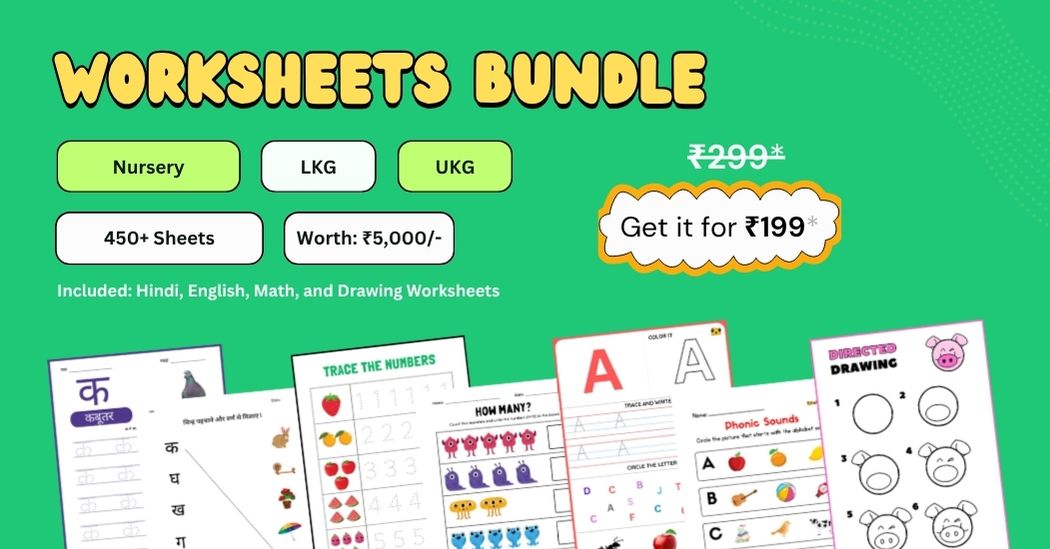
When parents search for worksheets for their children, they usually find the same thing everywhere: simple tracing sheets. A to Z tracing. 1 to 10 tracing. Repeated copying. But early childhood learning is much more than tracing lines. Children between the ages of 2 and 6 learn best when they can see, observe, match, circle, connect, and think. That is exactly why we created the Effling Kids 65+ Creative Worksheet Bundle for Nursery, LKG, and UKG. This is not just another printable pack. It is a structured preschool learning bundle designed carefully for Indian children, covering Hindi, English, Math, and Drawing, all in one place, at an affordable price of ₹199. Designed for Real Early Learning (Age 2–6 Years) The bundle begins from the toddler stage. At this age, children are not ready for heavy writing. They need movement, hand control and visual exposure. So we start with scribbling worksheets, line tracing practice, and shape-based movements. These simple activities help develop pencil grip, hand-eye coordination, and fine motor control. Before a child writes the alphabet or numbers properly, their hands must learn control, and that is where these toddler worksheets help. As children move into Nursery, LKG, and UKG, the worksheets become more structured and concept-based. Hindi Worksheets – From अ से ज्ञ to Word Recognition Hindi foundation is extremely important in the early years. That’s why this bundle includes complete Hindi worksheets from अ से ज्ञ (a se aha, k se gya). But we didn’t stop at letter recognition. Children get to match letters with pictures, circle the correct Hindi word, and practice 2-letter, 3-letter, and 4-letter Hindi words. Instead of memorizing, they start identifying. Instead of copying, they start understanding. These Hindi worksheets help build early reading skills, vocabulary, and confidence. For parents searching for Hindi worksheets for Nursery, LKG, or UKG, this bundle gives a complete, structured path. English Worksheets – Beyond ABC Tracing Most English worksheets focus only on writing capital A to Z and small a to z. While tracing is important, understanding letters and sounds is more important. This bundle includes capital letters, lowercase letters, fill-in-the-missing-alphabet activities, phonics worksheets, matching letters, and even simple word search activities for UKG level. Children learn to recognize letters, connect them with sounds, and identify words visually. Activities like “look and circle” and “match the letters” improve observation and early reading ability. Instead of mechanical writing, children develop recognition and thinking skills. Math Worksheets – Concept Before Calculation Math in early childhood should never feel stressful. It should be visual, playful, and logical. The bundle includes number tracing from 1 to 100, counting and matching activities, “how many” worksheets, number matching 1–20, reverse counting, simple addition and subtraction for UKG, and quantity-based exercises. Children learn to connect numbers with real quantities. They count objects. They match numbers. They understand before solving. This approach builds logical thinking rather than rote memorization. Drawing & Creative Worksheets, Thinking with Imagination Creativity is not separate from learning; it is part of brain development. Inside this bundle, children get alphabet coloring sheets, animal tracing worksheets, maze games, same-or-different activities, opposites worksheets, big-or-small comparisons, and connect-the-picture exercises. These activities improve focus, visual discrimination, and cognitive ability. At the same time, they keep learning fun and engaging. What Makes This Bundle Different? The biggest difference is structure. Instead of downloading random worksheets from different websites, parents get a complete learning flow from toddler to UKG in one organized bundle. It covers: All are designed for preschool children aged 2–6 years. And the entire bundle is available for just ₹299, less than the cost of a few notebooks. Who Is This Bundle For? This worksheet bundle is ideal for parents teaching at home, preschool teachers, homeschooling families, and anyone looking for creative worksheets for Nursery, LKG, and UKG. If you are searching for preschool printable worksheets, Hindi worksheets for kids, English worksheets for LKG, math worksheets for UKG, or creative drawing worksheets for kindergarten, this bundle brings everything together in one place. Final Thoughts Early learning should be interactive. It should be visual. It should help children think before they write. The Effling 65+ Creative Worksheets for Nursery, LKG & UKG are designed with that belief. Real education is not about copying letters again and again. It is about understanding. And that is where learning truly begins.