
Most children struggle with multiplication tables.
Not because math is hard, but because the way we teach it is.
For years, kids have been told to memorize tables again and again.
But memorizing without understanding often leads to fear, confusion, and forgetfulness.
What if tables could be learned in a smarter, easier way?
Introducing a Better Way to Learn Tables
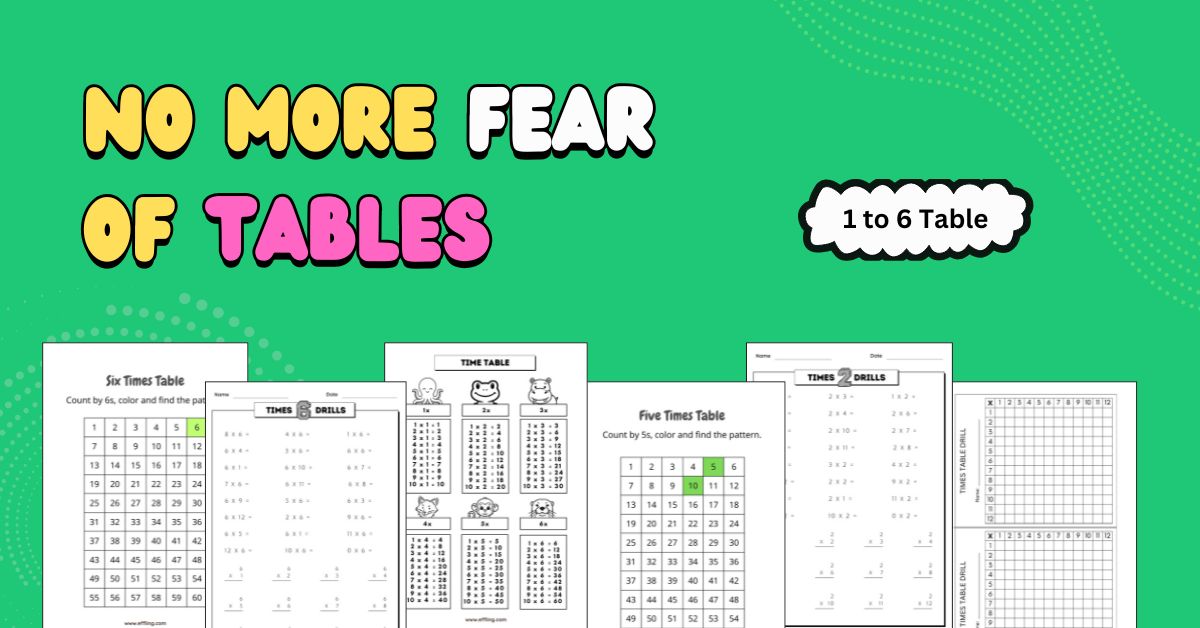
We designed these math worksheets to help children see, practice, and understand patterns, not just repeat numbers.
Instead of only reading tables like:
2 × 3 = 6
3 × 4 = 12
Children get to:
- Practice step by step
- Write answers themselves
- Find patterns visually
- Learn through repetition with understanding
What Makes These Worksheets Different
1. Practice + Writing = Better Learning
Children don’t just read tables, they write them.
Writing helps:
- Improve memory
- Build number clarity
- Strengthen learning through action
When a child writes 2 × 5 = 10 multiple times,
They don’t just remember it, they understand it.
2. Pattern-Based Learning (Not Just Memorizing)
In worksheets like “count by 2s, 3s, 4s,” children:
- Identify number patterns
- See how numbers grow
- Understand multiplication as repeated addition
This builds real math understanding, not just rote memory.
3. Step-by-Step Table Drills
Each page focuses on one table:
- 1 times table
- 2 times table
- 3 times table and more
Children practice:
- Mixed questions
- Repeated formats
- Gradual difficulty
This builds confidence slowly without pressure.
4. Visual + Activity-Based Learning
With grids, coloring, and patterns:
- Kids stay engaged
- Learning feels like an activity, not pressure
- Concepts become easier to grasp
Why This Matters for Early Learners
Rote learning often leads to:
- Fear of math
- Weak basics
- Lack of confidence
But when children:
- Write
- See patterns
- Practice actively
They develop:
- Strong number sense
- Better memory
- Confidence in solving problems
How to Use These Worksheets
- Use daily for 10–15 minutes
- Start with one table at a time
- Let the child write answers (don’t rush)
- Repeat pages for better clarity
- Use coloring pages to make learning fun
Consistency matters more than speed.
Final Thought
Math is not about memorizing numbers.
It’s about understanding patterns and building confidence.
When children learn through writing and practice,
they don’t just remember tables — they learn how math works.
That’s the goal.